
Object–relational mapping (ORM) is a programming technique for converting data between incompatible type systems using object-oriented programming languages. This creates, in effect, a “virtual object database” that can be used from within the programming language.
In essence, ORM is a design pattern for converting (wrapping) that data stored within a relational database into an object that can be used within an object oriented language. It creates a layer between the language and the database, helping programmers work with data without the OOP paradigm.
Compared to traditional techniques of exchange between an object-oriented language and a relational database, ORM often reduces the amount of code that needs to be written. It standardizes interfaces reducing boilerplate and speeding development time. Advocates of ORMs claim they increase productivity, improve application design, reuse code and maintain the application over time. On the other hand, ORM suffers the disadvantage of the abstraction obscuring what’s happening in the code. And over-use of ORM software can produce poorly designed databases.
There are a fairly wide range of ORM software available. Here’s our recommendations summarized in a legendary ratings chart.
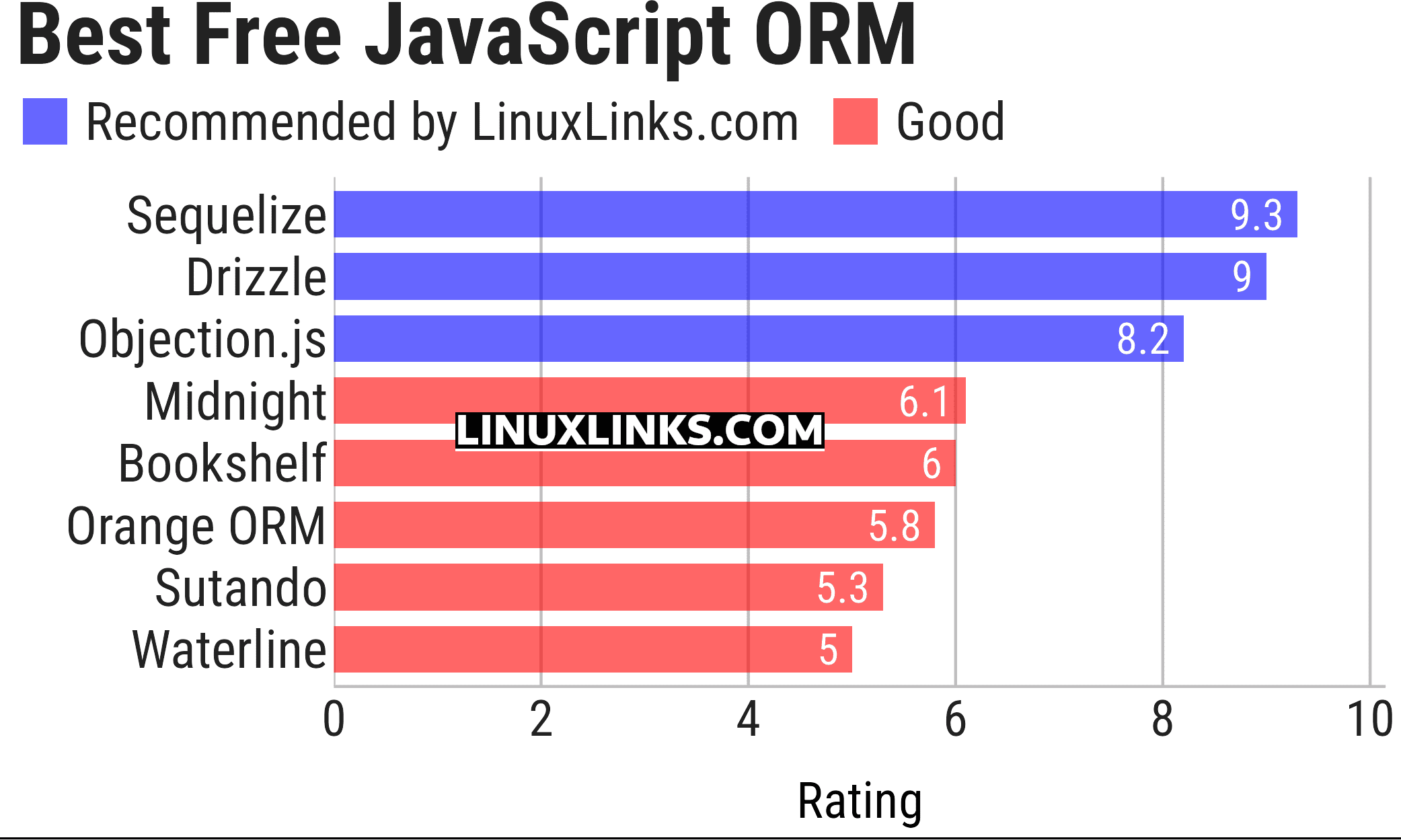
Let’s explore the 8 ORM tools for JavaScript. For each program we have compiled its own portal page, a full description with an in-depth analysis of its features, together with links to relevant resources.
| JavaScript Object-Relational Mapping Software | |
|---|---|
| Sequelize | Promise-based Node.js ORM for Postgres, MySQL, MariaDB, SQLite and more |
| Drizzle | Lightweight, headless object-relational mapper |
| Objection.js | ORM for Node.js that aims to stay out of your way |
| Midnight | ORM for SQLite |
| Bookshelf | ORM for Node.js, built on the Knex SQL query builder |
| Orange ORM | Runs on Node.js, Bun and Deno, supporting CommonJS and ECMAScript mods |
| Sutando | Object-relational mapper for Node.js |
| Waterline | Adapter-based ORM for Node.js |
This article has been updated to reflect the changes outlined in our recent announcement.
 LinuxLinks helps you discover the best free and open source software for Linux. Explore our extensive collection of recommended applications, including alternatives to popular proprietary software. We also publish software reviews, Linux tutorials, hardware reviews, free programming books and articles covering the wider open source community. Browse our Linux resources to discover more. Know a useful free and open source Linux application we haven't covered? Suggest a program for inclusion. Has your software been featured on LinuxLinks? Display one of our Featured on LinuxLinks badges on your website or GitHub README. |
Please read our Comment Policy before commenting.